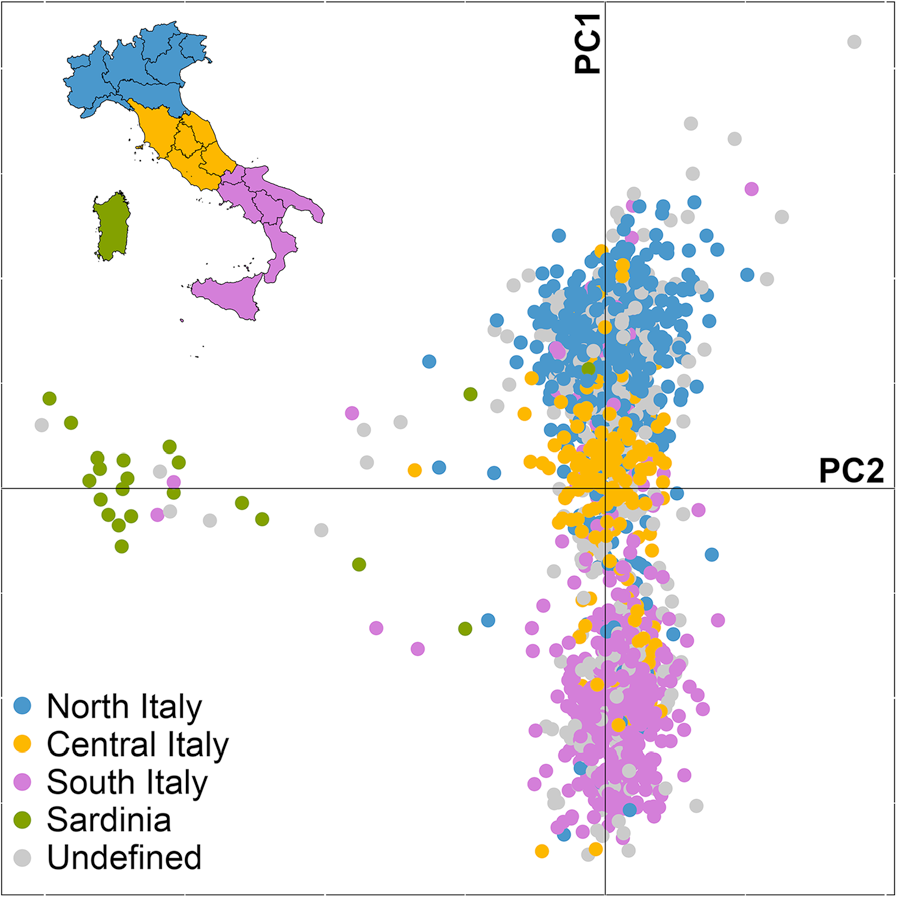
Southern Italians are closest to the modern Greeks, while the Northern Italians are closest to the Spaniards and Southern French. There is also Bronze/Iron Age Middle Eastern admixture in Italy, with a much lower incidence in Northern Italy compared with Central Italy and Southern Italy.
Leia mais
Italians share a common culture, history, ancestry and language. They are the heirs of three of the most important ancient civilizations: the Greek one which fluorished in Magna Graecia (south Italy), the Etruscan one and the Roman one, which assimilated the former two.Its main findings show that Italian DNA has from 7 to 30 times more differences than those registered between the Portuguese and the Hungarians. This variety is present everywhere, from North to South and includes also Italy's islands, Sardinia and Sicily.

Who are southern Italians descended from
Finally, Southern Italians were found to present genetic affinity with populations from the Eastern Mediterranean and particularly from Crete, Cyprus, and the Anatolian/Dodecanese islands [17], with people from Sicily also showing increased proportion of ancestry components likely introduced during the Arab occupation …
The major ethnic group in Italy is the Italians, who account for 95% (above 60 million) of the total population of Italy. The remaining 5% of the population consists of ethnicities like Albanians, Romanians, Ukrainians, and other Europeans (2.5%); Africans (1.5%), and several other minorities (1%).
| Demographics of Italy | |
|---|---|
| Net migration rate | 1.3 migrant(s)/1,000 population (2020) |
| Nationality | |
| Nationality | noun: Italian(s) adjective: Italian |
| Major ethnic | Italians |
The major ethnic group in Italy is the Italians, who account for 95% (above 60 million) of the total population of Italy. The remaining 5% of the population consists of ethnicities like Albanians, Romanians, Ukrainians, and other Europeans (2.5%); Africans (1.5%), and several other minorities (1%).

| Demographics of Italy | |
|---|---|
| Net migration rate | 1.3 migrant(s)/1,000 population (2020) |
| Nationality | |
| Nationality | noun: Italian(s) adjective: Italian |
| Major ethnic | Italians |
Do Italians have strong genetics
In Europe, Italians have the highest genetic diversity. The gradient of their genetic variability, scattered all over the peninsula, encloses on a small scale the whole genetic variance between southern and continental Europeans.
All populations from Southern Italy (SSI), Greece (both mainland and insular) and Southern Balkans share a predominant Sardinian (Neolithic-like) genetic component which accounts for more than half of their ancestry.
The major ethnic group in Italy is the Italians, who account for 95% (above 60 million) of the total population of Italy. The remaining 5% of the population consists of ethnicities like Albanians, Romanians, Ukrainians, and other Europeans (2.5%); Africans (1.5%), and several other minorities (1%).
Leia mais

Similarities between Spanish and Italian:
They both come from “Vulgar Latin,” that's why they have so much in common. Italian and Spanish share 82% lexical similarity. For instance: In Spanish, the word “jardín” and, in Italian word “Giardino” means “place.”Ethnic Italians can be considered as the indigenous peoples of Italy. They are descended from the Romans. However, ethnic Italians contains genes from many other cultures that previously inhabited the Italian peninsula, including Greeks, Etruscans, Umbrians, etc.In Europe, Italians have the highest genetic diversity. The gradient of their genetic variability, scattered all over the peninsula, encloses on a small scale the whole genetic variance between southern and continental Europeans.Being Mediterranean, Italian women have very distinct characteristics that set them apart from other ethnicities. Italian women are known to have an intense gaze, olive skin, dark eyes, and dark hair. High cheekbones, a small or Roman nose, long hair, and soft lips are considered beautiful in Italy.
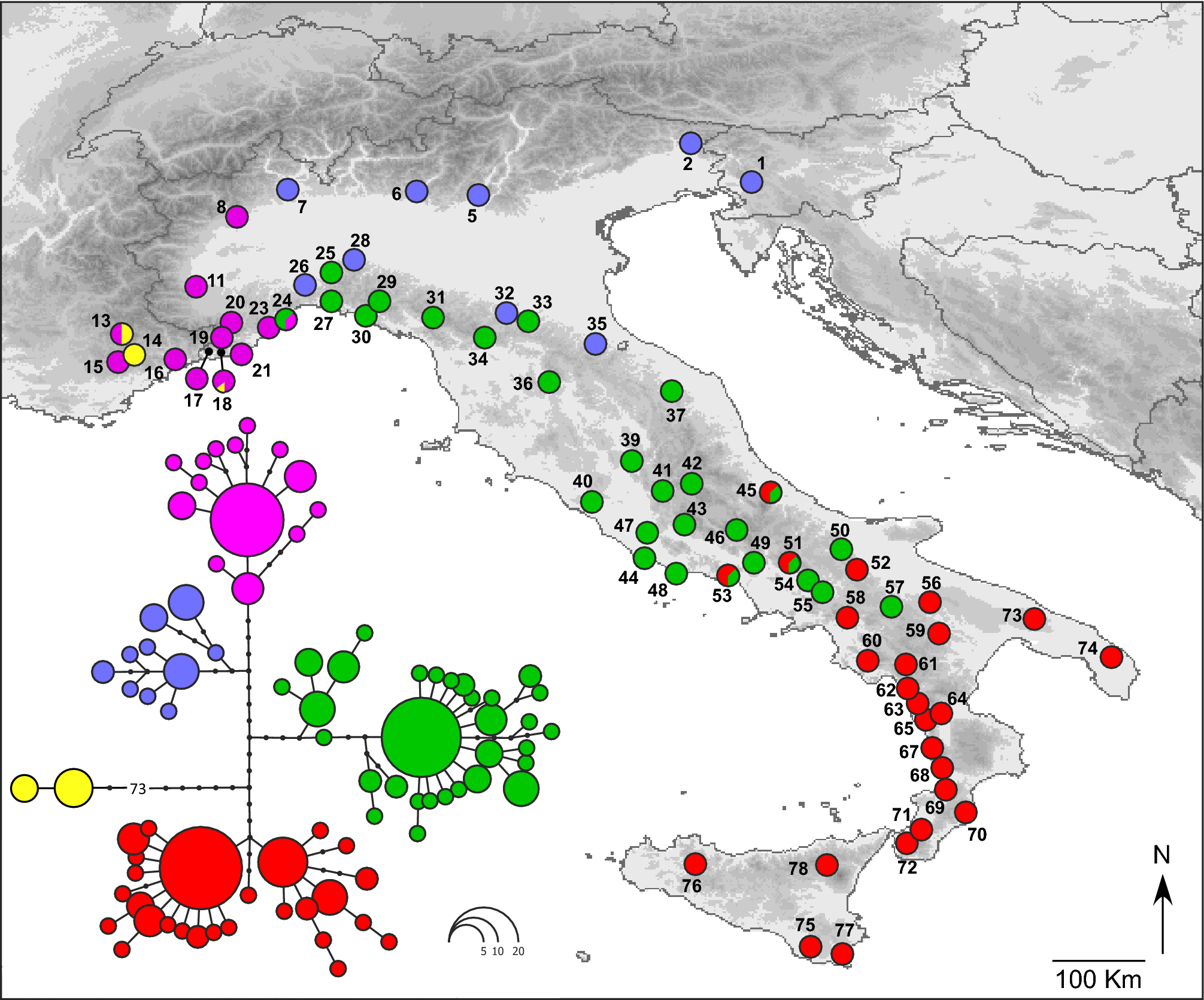
Expanding our reach is important to Ancestry as is understanding your family history and through our communities updates we are able to do both. Our updated communities now include 87 in Italy, from Lombardy to Sicily, and 9 in Croatia and Slovenia.Sicilians are darker than Northern Italians, their ancestry reflecting a mixed heritage of peoples passing through the island. The Greeks, the Moors, the Normans and the Romans were among these peoples whose presence helped to create what we now think of as Sicilian culture.Latin
The Italian language stems directly from Latin, just like other Romance languages like Spanish, Catalan, Portuguese, French, Romanian, and other minority languages (Occitan, Provençal, Galician, Ladin and Friulan).Spaniards and Italians are culturally similar people because of their geographical proximity. They share similar weather and traditions. They both have Latin roots. Both cultures are warm, communicative, and spontaneous.

Similarities between Spanish and Italian:
They both come from “Vulgar Latin,” that's why they have so much in common. Italian and Spanish share 82% lexical similarity. For instance: In Spanish, the word “jardín” and, in Italian word “Giardino” means “place.”There are undoubtedly many Italians alive today who are directly descended from people who lived in Italy during the Roman era, but most (if not all) of them will have at least some admixture from other European peoples too.What is Italian citizenship by descent Italian citizenship by descent is possible for individuals who are born to Italian parents, grandparents, great grandparents (there is no upper limit in terms of the number of generations).olive skin
Italian skin tone is also commonly referred to as olive skin or Mediterranean skin. It can also be described as having a tannish, or light-moderate brown hue.

Italians have all different eye colors including brown, hazel, green, and blue. There are blonde, brunette, and red-haired Italians. The more North you move in Italy the more frequently you will see Italians with blue eyes.On current information to date, the present-day Sicilian gene pool has a small, significant contribution of African (Negroid) genes, from contacts either numerically minor or for a brief time span.