Nadal suffers from Müller-Weiss syndrome, which he was diagnosed with in 2005, the same year he won his first French Open.
Leia mais
abdominal tear
Rafael Nadal 's abdominal tear, which forced him out of Wimbledon , could take six months to heal.Spanish newspaper Marca (h/t ESPN's Simon Cambers) reported in July during Wimbledon that Nadal had a 7-millimeter tear in one of his abdominal muscles. The World No. 3 reached the Wimbledon quarterfinals, where he defeated Taylor Fritz 3-6, 7-5, 3-6, 7-5, 7-6 (10-4).

What was Nadal last surgery
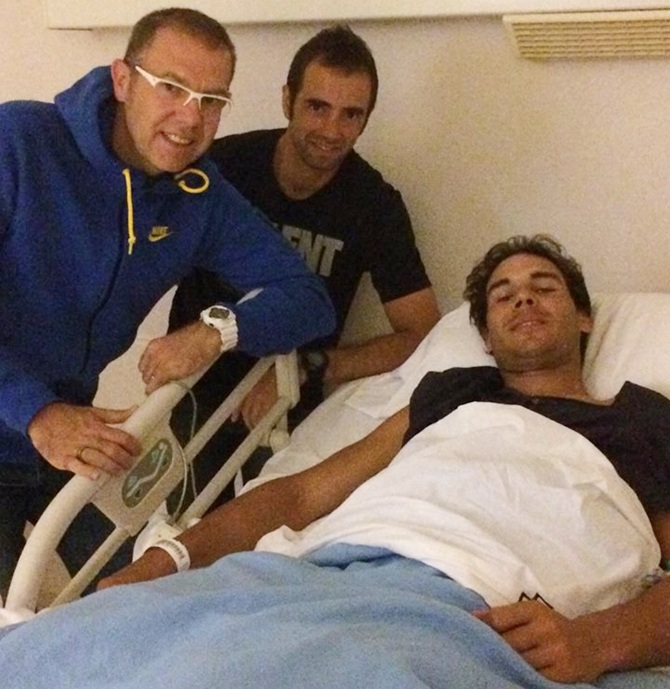
Per his PR, Rafael Nadal underwent an laparoscopic appendectomy today in Barcelona. "Thanks for all your support! On my way to the operation room for a small surgery," Nadal wrote in a Facebook message, which had a photo of the 14-time Grand Slam champion as he was going in for the procedure.
Rafael Nadal's abdominal injury that forced him to retire from Wimbledon could take 6 months to heal, according to a sports medicine specialist.He battled on valiantly and managed to overcome the American in a final-set thriller. It has now been reported in the Spanish press that medical tests revealed he suffered a seven-millimetre tear in one of his abdominal muscles during the match.With an abdominal muscle strain you can sometimes just continue to play tennis. However, whilst it is still painful it is best if you avoid serves and overhand strokes.

A pulled stomach muscle is often an overuse injury. Repetitive movements, usually in sports or other physical activity, cause the muscle to stretch or tear. Other causes include: Accidents, such as falls or motor vehicle wrecks.
Does an abdominal tear require surgery
If a total rupture of the muscle occurs, surgical repair of the rectus abdominis may be necessary. Rectus abdominis repair is a successful surgical procedure and it is important that you are active in your rehabilitation both before and after your operation.
Depending on the number of fibers torn, this type of injury may be quite debilitating for the athlete. The athlete may experience sudden abdominal pain, marked tenderness, localized swelling, and discoloration. Any and all movements of the athlete may be painful with the athlete guarded in his/her movements.
Most abdominal strains will heal within a few weeks.
Leia mais

If you have an abdominal strain, the surface of your stomach area may feel tender and inflamed. You're more likely to feel these sensations when you're contracting your abdominal muscles and moving. Other symptoms include: sudden sharp pain.soreness or tenderness. pain or discomfort when touching the abdomen. swelling. bruising.After this inflammatory phase, the muscle begins to heal by regenerating muscle fibers from stem cells that live around the area of injury. However, a significant amount of scar tissue also forms where the muscle was injured. Over time, this scar tissue remodels, but the muscle tissue never fully regenerates.When the stomach ruptures, a hole is formed. This open hole lets out the stomach contents into the abdominal cavity where it results in infection and requires surgical intervention. The medical term for this is gastrointestinal perforation, and it's almost always not caused simply by overeating.

The 10 Best Muscle Recovery Foods and Drinks
- Tart cherry juice. Drinking tart cherry juice may benefit both trained athletes and novice gym-goers alike.
- Watermelon and watermelon juice. Watermelon is sweet, hydrating, and loaded with nutrients.
- Fatty fish.
- Pomegranate juice.
- Beet juice.
- Whey protein shakes.
- Eggs.
- Dairy.
But severely injured muscles, such as muscles that have been torn, frequently require treatment involving medication and invasive surgeries, and recovery can take a long time. However, recent research suggests that something as simple as massaging the injury site can speed up healing.If you have an abdominal strain, the surface of your stomach area may feel tender and inflamed. You're more likely to feel these sensations when you're contracting your abdominal muscles and moving. Other symptoms include: sudden sharp pain.If you have a gastrointestinal or bowel perforation, you may experience: Abdominal pain or cramping, which is usually severe. Bloating or a swollen abdomen. Fever or chills.

Drink at least 16 ounces of water or healthy drinks, such as coconut water, green or black tea, and chocolate milk. Or you can choose a low-sugar sports drink. These drinks contain electrolytes, such as potassium and sodium, that can prevent and relieve muscle cramping.The 10 Best Muscle Recovery Foods and Drinks
- Tart cherry juice. Drinking tart cherry juice may benefit both trained athletes and novice gym-goers alike.
- Watermelon and watermelon juice. Watermelon is sweet, hydrating, and loaded with nutrients.
- Fatty fish.
- Pomegranate juice.
- Beet juice.
- Whey protein shakes.
- Eggs.
- Dairy.
After this inflammatory phase, the muscle begins to heal by regenerating muscle fibers from stem cells that live around the area of injury. However, a significant amount of scar tissue also forms where the muscle was injured. Over time, this scar tissue remodels, but the muscle tissue never fully regenerates.5 Foods to Help Heal Muscle Tears
- Kale (for Vitamin C and E) This dark green leafy veggie is a superfood that packs in more nutrients than you can count.
- Pumpkin Seeds (for Zinc)
- Carrots (for Vitamin A)
- Tuna (for Omega 3)
- Nuts (for B-Complex Vitamins)

Mallory Weiss tears are one of many causes of bleeding in the upper gastrointestinal tract. The main symptoms (bloody vomit and dark, sticky stools) require an urgent medical evaluation to assess their severity. Though your healthcare provider will monitor you closely, most Mallory Weiss tears heal on their own.When the stomach ruptures, a hole is formed. This open hole lets out the stomach contents into the abdominal cavity where it results in infection and requires surgical intervention. The medical term for this is gastrointestinal perforation, and it's almost always not caused simply by overeating.