Older Guys Can Still Make Gains
They found that guys between 35 and 50 years old built just as much muscle as those between 18 and 22 years old. DEXA (duel-energy x-ray absorptiometry) scans showed that the college-aged men gained around two pounds of muscle, while the middle-aged men put on 2.5 pounds of muscle.
Leia mais
How to Build Muscle Naturally After 35
- Weight Train 3-5X per week. The National Association of Sports Medicine says that after 35, you lose from 0.5% to 1% of your muscle mass per year.
- Rest More.
- Eat More Protein.
- Take Care of Injuries.
- Warm Up Thoroughly and Stretch as Necessary.
After age 30, your lean body mass begins to decrease at a more rapid pace than it did in your 20s, so it's a great time to take action to slow those losses. Building muscle mass after 30 isn't hard, but it does take finding the right strength-training program and being consistent with it.

How often should a 35 year old man workout
The American Heart Association recommends adults get 150 minutes of exercise each week, including at least 20 minutes of vigorous exercise three times a week. But it's important to ease into a workout regimen to give the body time to recover. Finding time to get sufficient sleep will go a long way, too.
Typically, muscle mass and strength increase steadily from birth and reach their peak at around 30 to 35 years of age. After that, muscle power and performance decline slowly and linearly at first, and then faster after age 65 for women and 70 for men.Late teens and early twenties are the perfect age to start bodybuilding. Puberty and bodybuilding are closely related because this is the fastest time for muscle growth. Between, 17-25, you will experience testosterone driven growth burst in your muscles.around 50 years old
In older people's muscles, by comparison, the signal telling muscles to grow is much weaker for a given amount of exercise. These changes begin to occur when a person reaches around 50 years old and become more pronounced as time goes on.

Maintaining fitness after the age of 35 can seem like a challenge, but it's important to remember that it's never too late to start making healthy changes in your life. Just because you're not as young as you used to be doesn't mean you can't reap the benefits of fitness.
At what age is it harder to build muscle
50
Building muscle mass when you're over 50 can be difficult. It's a good idea to check with your doctor and a fitness trainer before you start any endurance training.
It's never too late to get in shape and reap the health benefits of physical fitness. So says a new study published in the journal JAMA Network Open.
There are plenty of ways to get fit after 35. You don't need to join a gym or start lifting weights; simply adding some bodyweight exercises to your daily routine can make a big difference. squats, lunges, push-ups, and sit-ups are all great exercises that can be done at home with no equipment needed.
Leia mais

Strength peaks at age 25.
Your muscles are at their strongest when you're 25, although for the next 10 or 15 years they stay almost as hefty – and this is one of the traits that can be most easily improved, thanks to resistance exercise.Typically, muscle mass and strength increase steadily from birth and reach their peak at around 30 to 35 years of age. After that, muscle power and performance decline slowly and linearly at first, and then faster after age 65 for women and 70 for men.Men are the strongest between 26 and 35 years of age.
But of course there are individual differences between athletes and some people peak before or after that age window.Testosterone levels are typically at their highest in men who are in their late teens and early 20s. That means they respond quickly to sexual arousal and have a very healthy appetite for all things sexual.

Typically, muscle mass and strength increase steadily from birth and reach their peak at around 30 to 35 years of age. After that, muscle power and performance decline slowly and linearly at first, and then faster after age 65 for women and 70 for men.The late 20s to mid-30s is considered their “prime.” Any player or competitor that is still competing at a high level at 40 years of age is often considered a marvel.around 50 years old
In older people's muscles, by comparison, the signal telling muscles to grow is much weaker for a given amount of exercise. These changes begin to occur when a person reaches around 50 years old and become more pronounced as time goes on.“Muscle mass peaks around age 40. [Then it] begins to decline due to sarcopenia,” explains Pete Rufo, a performance coach at Beast Training Academy in Chicago. “A major contributor to muscle mass decline is lack of exercise and sedentary lifestyles.

No matter what your age, you can improve your fitness.
If it's been a long time since you've exercised and you're feeling less than fit, you might think that it's too late to make a change. But you're wrong. You can improve your fitness at any age.Is Bodybuilding Possible after the 30s It's not impossible yet become harder to build muscles as you age. According to the studies, aging can cause an imbalance between muscle building and muscle breakdown. If you want to start bodybuilding, start gaining as much muscle mass as possible before you reach age 40.Your muscles are their strongest at age 25. At 25, your physical strength is at its peak, and stays this way for the following 10 to 15 years. This trait is among the ones you can improve easiest, with the help of the right workout. Your desire to settle down is highest at age 26.A new survey finds most Americans believe the “sweet spot” in life is right in the mid-30s. A poll of 2,000 people finds four in 10 would not go back to their 20s. Instead, the perfect age to be frozen in time at is 36 years-old.
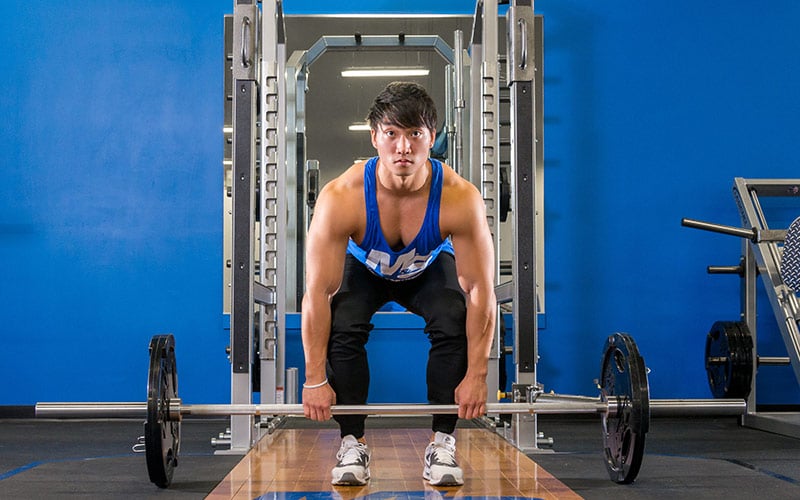
The physical peak age is the point in your life when your reproductive system, motor abilities, strength, and lung capacity are in optimal condition – this generally occurs between 30 and 40 years of age.For the average man, the body is in its best physical shape in the early to mid-20s. But time can take a toll by age 30, when muscle strength starts to decrease by as much as 3 percent to 8 percent every 10 years. By age 40, reaction time starts to slow. At age 50, bones become brittle.